
Trial Period Termination in New Zealand: What Every Employer Needs to Know
A trial period is not a licence to dismiss at will. Here are the legal requirements, common mistakes, and best practices every NZ employer should know before ending employment during a trial period.
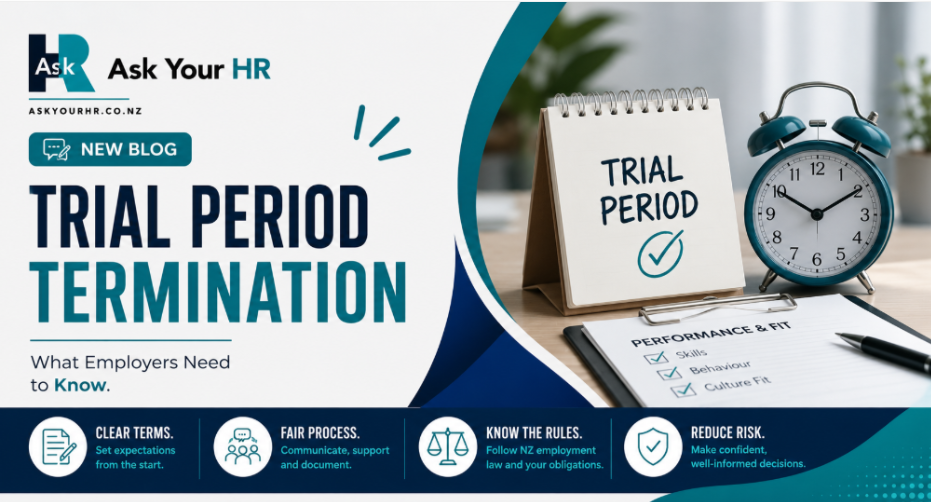
Hiring the right employee is one of the most important decisions a business makes — but sometimes, despite careful recruitment, a new hire simply isn't the right fit.
This is where a trial period can provide employers with flexibility. A valid trial period allows eligible employers to assess whether a new employee is suitable for the role while giving the employee an opportunity to determine whether the position is right for them.
However, many employers mistakenly believe that a trial period gives them the unrestricted right to dismiss an employee at any time. In reality, there are important legal requirements that must be met before and during the trial period.
In this guide, we'll explain how trial period termination works in New Zealand, the legal requirements employers must follow, common mistakes to avoid, and best practices for reducing employment risks.
What Is a Trial Period?
A trial period is a clause included in an employment agreement that allows an eligible employer to terminate a new employee's employment within a specified trial period, provided the legal requirements are met.
The purpose of a trial period is to:
- Assess the employee's suitability for the role.
- Evaluate performance and conduct.
- Determine cultural fit.
- Allow both parties to decide whether the employment relationship should continue.
A trial period is intended to reduce hiring risk, but it does not remove an employer's obligation to act fairly and lawfully.
Trial Period vs Probationary Period
Many employers confuse these two concepts.
Trial Period
- Available only if all legal requirements are satisfied.
- Must be included in the employment agreement before the employee starts work.
- May limit an employee's ability to raise certain personal grievances relating to dismissal, provided the trial period is valid and correctly applied.
Probationary Period
- Focuses on supporting and assessing an employee's performance.
- Employees generally retain the ability to challenge a dismissal.
- Employers must follow a fair performance management process.
Understanding the difference is essential before deciding which approach is appropriate for your business.
Legal Requirements for a Valid Trial Period
For a trial period to be enforceable, employers should ensure that:
- The trial period is clearly stated in the written employment agreement.
- The employee signs the agreement before starting work.
- The trial period complies with current New Zealand employment legislation.
- The employee is informed of the trial period before accepting employment.
- The employee is given a reasonable opportunity to seek independent legal advice before signing the agreement.
Failure to meet these requirements may mean the trial period cannot be relied upon.
Can You Dismiss an Employee During a Trial Period?
Yes — but only if the trial period is valid and the employer complies with the relevant legal requirements.
A trial period is not a licence to dismiss employees unfairly or without following appropriate processes.
Employers should still:
- Act in good faith.
- Communicate openly.
- Provide feedback where appropriate.
- Make decisions based on genuine concerns.
- Follow the notice provisions in the employment agreement.
Good HR practices remain important throughout the trial period.
Common Reasons for Trial Period Termination
An employer may decide that the employee is not suitable because of:
Performance Issues — The employee is unable to perform the required duties despite reasonable support.
Poor Attendance — Frequent lateness, absenteeism, or reliability concerns.
Conduct Concerns — Behaviour that does not meet workplace expectations.
Lack of Skills — The employee does not demonstrate the required competency for the role.
Cultural Fit — The employee's working style or behaviour may not align with the organisation's values or operational requirements.
Best Practice Before Terminating During a Trial Period
Even where a valid trial period exists, employers should avoid making rushed decisions.
Good practice includes:
Regular Check-ins — Schedule regular discussions during the trial period to review performance and answer questions.
Provide Feedback — Employees should understand:
- What is expected.
- What is going well.
- Where improvements are needed.
- What support is available.
Keep Records — Maintain documentation of:
- Meetings
- Performance concerns
- Training provided
- Feedback discussions
- Attendance issues
Good documentation helps demonstrate that decisions were reasonable.
Be Honest — Avoid surprising employees with termination. If concerns exist, discuss them early.
Common Mistakes Employers Make
Many disputes arise because employers assume a trial period removes all legal obligations.
Avoid these common mistakes:
- ❌ Asking employees to sign the employment agreement after they have started work.
- ❌ Assuming no process is required.
- ❌ Failing to provide contractual notice.
- ❌ Ignoring documented performance issues.
- ❌ Relying on verbal agreements.
- ❌ Treating employees inconsistently.
- ❌ Using trial periods for existing employees changing roles.
Practical Checklist Before Ending Employment
Before proceeding with termination during a trial period, ask yourself:
- ✔ Is the trial period valid and documented?
- ✔ Was the agreement signed before employment commenced?
- ✔ Have performance concerns been discussed?
- ✔ Have expectations been communicated clearly?
- ✔ Have you acted in good faith?
- ✔ Have you complied with the notice provisions?
- ✔ Is your decision properly documented?
If any of these questions raise concerns, seek professional HR advice before taking further action.
Frequently Asked Questions
Does a trial period mean I can dismiss someone without any process?
No. While a valid trial period may affect an employee's ability to raise certain dismissal-related personal grievances, employers are still expected to act lawfully, in good faith, and in accordance with the employment agreement.
Can an employee refuse a trial period?
Yes. A trial period forms part of the employment agreement and must be agreed to by both parties before employment begins.
What happens if the employment agreement is signed after the employee starts?
If the employee starts work before signing an agreement containing a trial period clause, the employer may not be able to rely on that trial period.
Should employers still provide feedback during a trial period?
Absolutely. Regular communication and documented feedback are considered good employment practice and help reduce misunderstandings.
Why Proper Documentation Matters
One of the biggest risks for employers is poor record-keeping.
Maintain copies of:
- Employment agreements
- Performance notes
- Meeting records
- Emails
- Training records
- Warning discussions (where applicable)
- Termination letters
Well-maintained documentation demonstrates that the employer acted fairly and professionally.
Final Thoughts
A trial period can be a valuable recruitment tool, but it should never be viewed as a shortcut to dismiss employees without careful consideration.
The most successful employers treat trial periods as an opportunity to support, coach, and evaluate new employees while maintaining fair and transparent processes. By ensuring employment agreements are completed correctly, communicating expectations clearly, documenting performance concerns, and complying with New Zealand employment law, businesses can significantly reduce the risk of disputes and make more confident hiring decisions.
At Ask Your HR, we help employers across New Zealand navigate trial periods, probationary periods, employee performance, disciplinary processes, employment agreements, and HR compliance. Whether you're hiring your first employee or managing a complex employment issue, our experienced HR consultants provide practical advice tailored to your business.
This article provides general information and does not constitute legal or HR advice. The right approach may vary from case to case. If you need specific advice for your situation, please contact us.
Need help with something specific?
Book a free HR & H&S audit and we'll show you where the gaps are.
Contact Us